
My name is Spencer. I’m an empowerment coach, teacher, and PhD student in East–West Psychology, Philosophy & Religion at the California Institute of Integral Studies. I come to this work as both a practitioner and a learner, drawing from lived experience and from wisdom traditions that understand healing as relational, embodied, and inseparable from context—personal, cultural, ancestral, and ecological.
My approach is shaped by depth psychology, Indigenous ways of knowing, and contemplative traditions rooted in Buddhism, Daoism, and Hindu philosophy. These perspectives inform a way of working that honors the unconscious, symbolism, and inner life while remaining grounded in presence, non-forcing, and integration. Central to this work is an understanding of healing as something that unfolds through relationship—with self, community, land, and the larger field of life—rather than through effort, control, or spiritual bypassing.
Rather than pushing for insight or change, I create spaces where awareness can emerge through listening, attunement, and compassion for what is already here. From this place, healing becomes less about fixing what is wrong and more about restoring connection, meaning, and wholeness in a way that feels humane, respectful, and real.
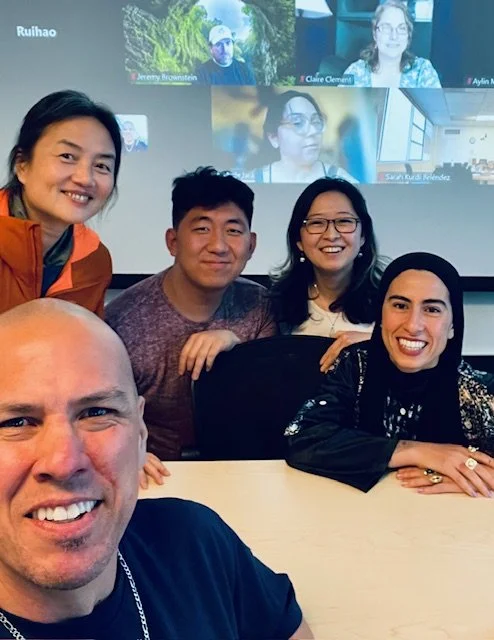
I came to this work through a life lived across many worlds—and through loss that reshaped me at my core. I grew up as the youngest of five siblings in a rural community, raised by a resilient single mother and shaped by land, water, and extended family. I carry both First Nations and European ancestry, and with that, the deep love and deep grief that come from belonging to lineages marked by beauty, resilience, and harm.
Over the years, I lost my First Nations grandmother and my First Nations father to addiction, and in 2020, I also lost my big sister from my European lineage to the same struggle. These losses were not abstract—they were intimate, relational, and devastating. They revealed how addiction moves through families and generations, and how grief, silence, and disconnection can quietly shape a life.
As I moved through sport, academia, corporate life, and entrepreneurship, I often appeared functional and successful on the outside while carrying unspoken grief, dislocation, and pain beneath the surface. For a long time, movement and achievement helped me survive what I did not yet know how to face. When those strategies eventually gave way, they opened the door to a profound inner reorientation—one that taught me the necessity of presence, truth, and relationship as the foundations of healing and wholeness.
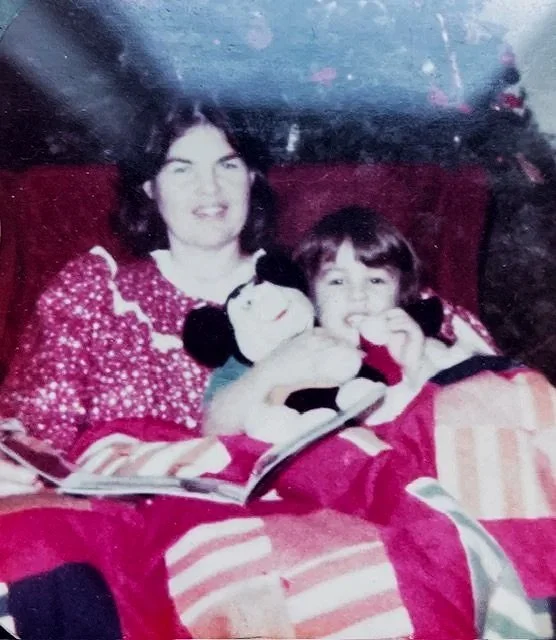
I carry both Indigenous and European ancestry, with roots among the Stó:lō, Squamish, and Coast Salish peoples on my father’s side, and primarily Austrian and German lineage on my mother’s side. My connection to the Fraser River Valley and the Pacific Northwest is not symbolic or abstract—it is lived, familial, and ongoing, shaped by land, water, community, and extended family relationships that continue to inform who I am and how I walk in the world.
This lineage shapes how I understand healing—not as an individual accomplishment, but as a relational, communal, and intergenerational process. In Indigenous worldviews, healing is inseparable from land, ancestry, belonging, and responsibility to the whole. In Western psychology, healing has often focused on the individual psyche. My work lives in the space between these perspectives, holding them in conversation so that healing can unfold through relationship rather than isolation.
Alongside psychological and philosophical study, I work with sound, symbol, and presence—drawing from deep listening, resonance beneath words, and ancestral ways of knowing that understand transformation as embodied and relational. These influences shape how I listen, how I speak, and how I accompany others through moments of change, grief, and becoming.
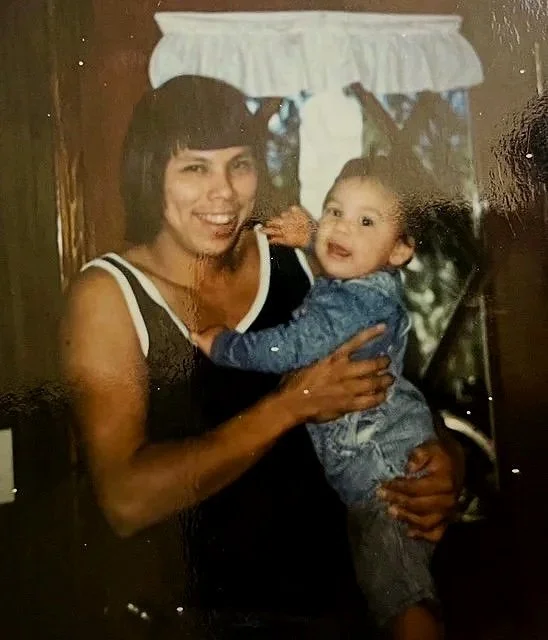
Spencer is also the creator of The Recovery Matrix, a long-form body of writing from his two years in South Florida, exploring addiction, awareness, and transformation through lived experience.